Wednesday, 24 February 2016

The nationality forfeiture Act. By Pierre-Dominique ANCEL

Afficher l'image d'origine

The nationality forfeiture Act has created a lot of controversy…

After the Paris attacks on November 13th 2015, the French President decided to deprive people with dual nationality who "flout the soul of France" of their French nationality. But this is not so easy to do...

Articles 23 to 25 of the French Civil Code say that someone born in France can't be deprived of his nationality. And International law forbids states from making people stateless.

The President wants to deprive a person of his nationality if it is proved that that person has committed a "crime or offense constituting an infringement of the fundamental interests of the nation," a terrorist act, a "crime or offense under Chapter 2 of Title III of Book IV of the Criminal Code (espionage, sedition, treason, etc.)," has evaded "his obligations under the Code of National Service," or "committed for a foreign state acts harmful to the interests of France."

The French President said that being born in France would not be a problem in his law: "We need to deprive a person (a dual national), convicted of a violation of the fundamental interests of the nation or of a terrorist act, of his French nationality".

Some people think this law will not work. According to the Ministry of the Interior (November 2014 figures), a quarter of French-born jihadi fighters in Syria are "new converts". They are not recent immigrants, and would not therefore be concerned by this measure since they are French nationals (they do not have dual nationality).

This law has divided the Socialist party. Mme Taubira, the Justice Minister, has had to resign over the issue…

Links :
http://www.lepoint.fr/politique/emmanuel-berretta/hollande-permet-la-decheance-de-nationalite-via-une-loi-23-12-2015-2004842_1897.php
http://www.lefigaro.fr/vox/politique/2015/12/22/31001-20151222ARTFIG00232-decheance-de-nationalite-decheance-de-christiane-taubira.php

Pierre-Dominique ANCEL wants to become a lawyer and work for an international environmental organization.

French justice... By Thomas LAFONT

Afficher l'image d'origine
Tapie in happier days...

In France, judicial issues are constantly in the news, including business trials. One of them interests me particularly: the trial of Bernard Tapie concerning the Adidas controversy.

Bernard Tapie is a French businessman. He made his fortune by buying up big companies in crisis, downsizing them, making them successful again before selling them on.

Bernard Tapie also wanted to be a politician. He was told that he first needed to put on hold his business dealings, which is what he did. He decided to sell Adidas. He asked his bank, the Crédit Lyonnais, to find a buyer. His bank told him that someone wanted to buy this company for two billion Francs. In fact, it is the bank itself that bought Adidas and then sold it to another businessman, Robert Louis Dreyfus, for 4.4 billion Francs without Tapie's knowledge.

A long trial took place, including at the court of appeal of Douai. After several long years, Christine Lagarde, the Finance Minister, decided in 2008 that arbitration was necessary. It led to a compensation of 404 million Euros for Tapie by the Finance Ministry. At the end of 2015, Bernard Tapie was told to repay the money that he had received…

He announced after this that he wanted to get back into politics once again to fight against unemployment; he even said that he would run for the French presidency in 2017.

Will another trial take place? Will his comeback in politics be a success? That's what we'll find out in the following months...

Thomas LAFONT wants to become a business lawyer.

The refugee crisis. By Jean GENES

Afficher l'image d'origine

“The migrants coming from Syria look more like fighters than refugees… This resembles an army!” This sentence, pronounced by the Hungarian Prime Minister Viktor Orban on October the 2nd 2015, is indicative of the malaise over the migrant situation all over the EU. Many people in other member states share his thoughts and the east European country’s barbed wire fence has met wide-spread approval throughout the continent; many frontiers have now been closed, such as the one between Austria and Slovenia.

European cooperation cannot really be deemed a success and it will now, without doubt, be even harder to find a way to prevent the euro-sceptics from accelerating the collapse of the EU...

According to the newspaper “Le Monde”, the country that has received the most refugees, not only Syrians, but also Iraqis and Eritreans, is Germany, with a million people asking to stay in the country under the Geneva Convention in 2015, which means a 500% growth over  a year.

More than urgent, the situation seems uncontrollable for the authorities, as the repartition plan has not been accepted and the “hotspots” set up in Greece to control the migrants’ flow are inefficient.

As Croatia, the Czech Republic, Romania and Slovakia have refused to accept the quotas imposed by the EU, new solutions have to be found... The newspaper “20 minutes” proposed to send back in their respective countries, mostly to Africa, all the migrants who arrived for economic reasons. I personally disagree with this proposition, as I think this will only take too much time, a time that could be better used to build the necessary infrastructures for all these war refugees fleeing from their countries.

Jean GENES wants to be a journalist.

What is ethnography? By Amélie Murray

Afficher l'image d'origine
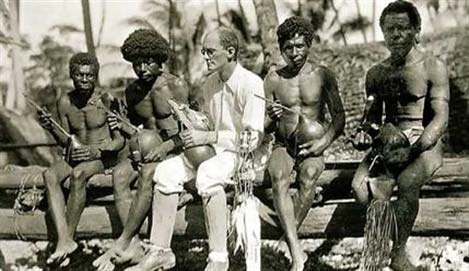
An ethnographer on a field trip...

Levi Strauss wrote: « L’ethnographie est le recueil des données sur le terrain principalement. L'ethnologie est l'analyse de ces données, et l'anthropologie est un travail comparatif. »

Ethnography is the study of peoples and cultures. In ethnology, you do not have to travel to faraway places, you mostly study books or reports other people have compiled from their ethnographic field work.

Ethnographers try to understand the people they are studying by adopting what may be called “the insider’s eye or point of view”, which means a long term engagement with an ethnic group, its culture; this is also called “participant observation” because the ethnographer must blend in, learn their culture, almost become one of them and observe. This can be one of the good sides of ethnography, because you spend months, even years, with a population group, you create bonds, and learn so much about a new culture. It could also be viewed as somewhat nefarious, voyeuristic, an intrusion into their private life. Also in quite a few cases it has been reported that the ethnographer creates such strong bonds with the ethnic group he is studying that he or she ends up staying with them, losing sight of his or her initial objectives…

Being an ethnographer can also be very dangerous; depending on the ethnic group studied, some populations can be uncooperative and even unwelcoming because they refuse the intrusion, want to remain unknown, or untouched; others can be aggressive, or simply not understand your intentions, and believe you are an enemy and even kill you… you might end up in the cooking pot, so to speak! It all depends on which ethnic group is being studied, and their willingness to share their culture.

Another negative side to this type of work is that you are far from your family, your usual living space, for a long period of time.

To face another society, another culture, can be very disconcerting, but it can also make people’s opinions change, make you question the way you have been living up to this point, your society, even your humanity; and that is the fascinating side of ethnography.

Amélie wants to become a social anthropologist.

When will we find another Earth-like planet? By Quentin CLAIRET

Afficher l'image d'origine

Are we alone in the Universe? This is surely one of mankind’s oldest questions. Over the centuries, explorers like Christopher Columbus and James Cook discovered new shores and civilisations. Scientists today, in their quest for knowledge and in their effort to understand Nature, also discover new territories, but in outer space…

Ancient Greek scholars knew of the existence of Venus and of Mercury just by looking up at the night sky. Today we know more about how the Universe is organised and our knowledge of our solar system is very precise, made of the Sun and eight planets. But our blue planet, the Earth, is the only one to host life and moreover intelligent life. Scientists think they are now able to explain why this life appeared and what is required to maintain it.

In 1995, the first exoplanet (one outside our solar system with similar characteristics to our own) was discovered. Since then, thousands of exoplanets have been discovered, including potentially “inhabitable” ones, thanks mostly to the Kepler space telescope sent into space in 2009.

NASA created media frenzy when it found Kepler452-b. This exoplanet is the same size as our Earth and its star is the same type as our Sun, a first. However, lots of information remains to be confirmed before being able to declare it “Earth 2.0”...

Both NASA (USA) and ESA (Europe) are working on new exoplanet seeker telescopes like TESS (for 2017) and PLATO (for 2024) which will work with the Earth Observatory to get new information like planet mass, atmosphere, and composition, which will help us better determine whether a planet can host life or not.

Considering the number of galaxies, and the number of solar systems in each galaxy, it is sure that other intelligent life forms exist in the Universe, but where? When will we find them? Are they advanced enough to communicate with us across distant space? Will we be advanced enough to understand their call, if and when it comes?

We have already learnt so many incredible things, but there are still so many marvellous discoveries to be made!

Webography :

Plus:
Science et Vie Junior #310: Can we find better than Earth?

Quentin wants to be an astronaut when he grows up!

The expansion of the hotel and tourism industry in Dubai. By Océanne RAVET

Afficher l'image d'origine
The Burj-al-Arab hotel

Dubai, which covers 4000 km² (three times smaller than the Île-de-France area) has more than one hundred 5 star hotels (eighth position in the 2015 trivago.fr “world city with the most 5 star hotels” rankings). It has more than three hundred hotels in all categories.

Dubai is famous for its excessiveness: the Burj-al-Arab hotel, for example, is a self-proclaimed “7 star” hotel, based on an artificial island. It is 321 meters tall! The website hotel.com notes that their cheapest rooms cost €1800 a night...

Dubai is also about tourism: 13.2 million tourists in 2014, up 8.2% in a year, according to the Emirates Tourism Department. This expansion can be explained by, of course, the luxury of the city, but also, in the context of Middle East instability, the fact that Dubai offers relative security for tourists and businessmen. Dubai hopes to welcome more than 20 million foreign tourists to the 2020 World Fair it is organizing.

But, does all this excess hide a more sinister side? Michel Duchaine, a social activist, considers Dubai a city “of sexual and employee slavery". He has collected damning testimonies from numerous Pakistanis who left their country to live their "Emirates dream" (the United Arab Emirates has one of the highest immigration rates in the world). Once immigrants arrive at the airport, the Emirati take their passports, and then make them do menial jobs (even if they are skilled workers) for very low wages (€2,85 a day) in extremely poor conditions (50°C in the shade…). Their activities outside work are also controlled. humanite.fr lists the numerous suicides and rapes of these foreign workers. This modern slavery is the hidden side of the city…

As a hotel manager, I would refuse to use slave labour. A luxury hotel can be run without mistreatment of its employees...

Océanne would like to work in the hotel industry.

Friday, 19 February 2016

Security breaches in US airports... By Julie Spadin

Afficher l'image d'origine

I plan on working in an airport. I've always loved traveling and, growing up, I moved everywhere, so airports are familiar to me.

This is why I chose to talk about the airport security. Millions of people use airports so, in order to prevent terrorist attacks and other crimes, airports have tight security systems. In every airport, there are policemen and police dogs (for explosives and drug detection), soldiers and security guards. There are metal detectors that screen the passengers for object that could be used as a weapon. For finding explosives, there are X-ray machines. These are the main big security systems but there are many more.

The TSA (Transportation Security Administration) is an agency of the US Homeland Security. It is responsible for the security of travelers in the United States. It carries out regular airport security inspections. In June 2015, the Red Team agents of Homeland Security investigated the security of a dozen US airports at checkpoints. Their investigation showed that there were many breaches in airport security. Agents disguised themselves as simple passengers and hid explosives and banned weapons in their luggage or under their clothes to see if they were detected. Out of 70 tests, 67 failed! This provoked a huge scandal. As a consequence, the director of the TSA was reassigned to another job and the TSA is working on improving its security systems in airports. These kinds of tests were also carried out in 2013; an undercover agent had managed to pass all the checkpoints with a fake bomb…

The terrorist attacks on the Twin Towers, as well as the recent terrorist attacks show that the security systems in airports, but also elsewhere, have many breaches and need to be more secure. Security is what keeps the world going. Airports being one of the most important ways of traveling have to be really secure in order to guarantee the security of the passengers as well as the countries.